The Wolter Lab studies how genetic variation – common and rare – affects risk and resilience in neurodevelopmental disorders
Leveraging the genetic diversity in human cell lines to identify modifiers of neurodevelopmental disease
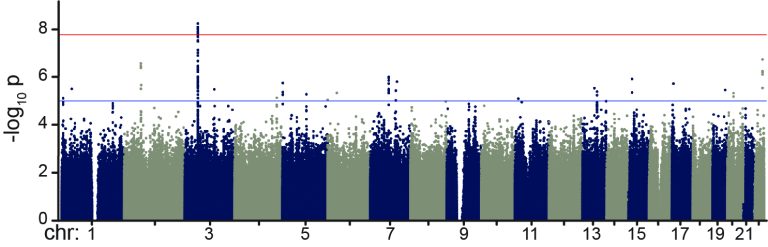
Genetic diversity shapes every human phenotype. This includes everyday traits such as cognition and brain structure, as well as risk for neurological and neurodevelopmental disease. Currently the most powerful tool for connecting regions of the genome to specific traits is the genome wide association study (GWAS), which correlates millions of genetic variants to a trait of interest in thousands of human participants. GWAS has revealed how genetics affects many disorders of the brain, but results are often difficult to interpret, and do not inherently explain the mechanism by which genetics affects the brain. To fill this gap, we are developing novel approaches to study genetic variation in libraries of genetically diverse iPSC lines, which can be differentiated into most cell types of the brain. Our goal is to identify, and mechanistically explore, genetic modifiers of neurodevelopmental disorders. These insights may provide deeper understanding of the heterogeneity in disease outcomes, and can be leveraged to test therapeutic hypotheses.
Molecular mechanisms granting resilience to neurodegeneration
A common feature of many neurodevelopmental and neurodegenerative diseases is the selective vulnerability of specific types of neurons to disease causing mutations. We are interested in understanding the molecular and genetic landscape that allows some neurons to function and survive, while others die. To do this we are studying a mouse model – Autosomal Recessive Spastic Ataxia of Charlevoix-Saguenay (ARSACS) – where cellular changes in early neurodevelopment lead to later neurodegeneration and loss of muscle control (ataxia). ARSACS affects cerebellar Purkinje neurons, which exhibit several striking phenotypes early in life, including changes in synaptic structure, trafficking deficits, and protein aggregation. The progressive nature of the disease allows us to study how neurodevelopmental processes affect later neurodegeneration. Furthermore, not all Purkinje neurons are equally affected. By studying disease progression over time we can understand the molecular and developmental processes that tip the balance towards neuronal survival or death, and identify pathways that can be targeted to slow disease progression.